Engine Fault Codes: What They Mean and When a Clean Fixes Them
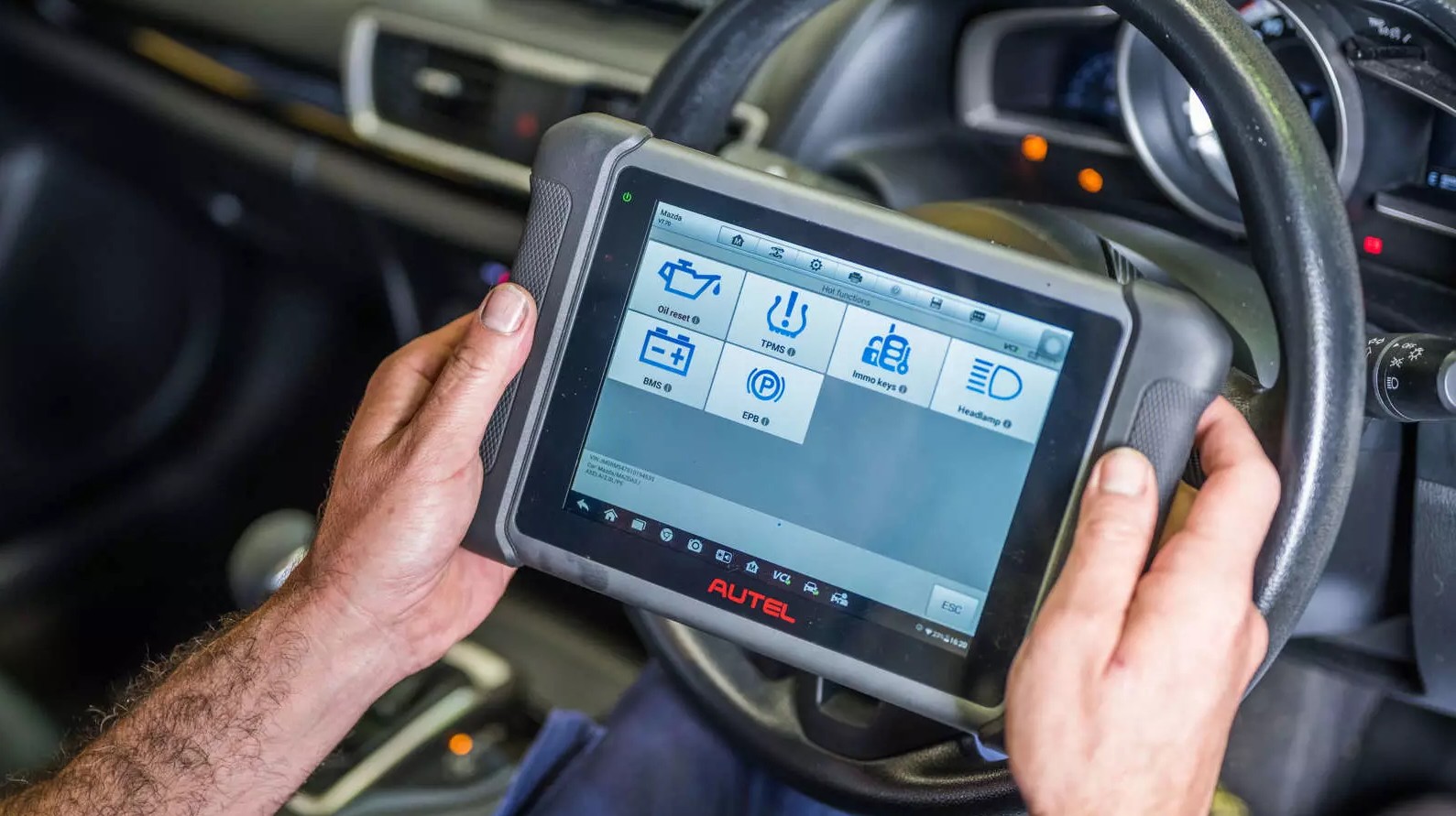
Got a code from your scan tool or mechanic? Look it up below. Every job starts with a free scan: Nas tells you what the car needs and what it costs, and nothing starts without your OK.
Or browse by system
An OBD-II fault code is the five-character code your car’s computer stores when it detects a fault, like P0401. It tells you where to look, not always what failed.
Meanings are the generic OBD-II definitions (SAE J2012). P1 codes vary by maker, so we confirm yours on the scan.
DPF fault codes
Diesel particulate filter
Diesel only. These codes mean the filter is filling with soot or ash faster than it can burn it off, or a regeneration keeps failing. Been quoted a new filter? Most of the filters we see are full, not finished, and a full one can be cleaned.
| Code | What it means | What you’ll notice |
|---|---|---|
| P0544 | Exhaust Gas Temperature Sensor Circuit (Bank 1 Sensor 1) | Exhaust temperature sensor fault: the engine light comes on and DPF burns abort or never start. |
| P0546 | Exhaust Gas Temperature Sensor Circuit High (Bank 1 Sensor 1) | Exhaust temperature reading too high: loss of power on hills, and burns may be cancelled to protect the engine. |
| P2002 | Diesel Particulate Filter Efficiency Below Threshold (Bank 1) | DPF not trapping or burning soot properly: engine light on, worse economy, and limp mode if it is left. |
| P2080 | Exhaust Gas Temperature Sensor Circuit Range/Performance (Bank 1 Sensor 1) | Exhaust temperature reading out of range: DPF burns start but never finish, and the DPF light keeps returning. |
| P242F | Diesel Particulate Filter Regeneration Incomplete | DPF burns are not finishing: the light keeps returning and the car feels flat. Ash in the filter is a common cause. |
| P244A | Diesel Particulate Filter Differential Pressure Too Low | Very little pressure across the DPF: the engine light comes on. Can mean a damaged filter or a sensor hose fault. |
| P244C | Exhaust Gas Temperature Too Low For Particulate Filter Regeneration (Bank 1) | Exhaust not getting hot enough to burn the filter clean: the DPF light stays on after a drive. |
| P2452 | Diesel Particulate Filter Pressure Sensor "A" Circuit | DPF pressure sensor fault: the engine light and DPF light come on and burns abort. |
| P2453 | Diesel Particulate Filter Pressure Sensor "A" Circuit Range/Performance | DPF pressure reading out of range: the car burns far too often or never at all. |
| P2454 | Diesel Particulate Filter Pressure Sensor "A" Circuit Low | DPF pressure reading too low: the engine light and DPF light come on, sometimes with limp mode. |
| P2458 | Diesel Particulate Filter Regeneration Duration Too Long | Burns taking too long to finish: the fan runs after you switch off and fuel use goes up. |
| P2459 | Diesel Particulate Filter Regeneration Frequency Too High | Burning far too often: the fan runs after short trips and fuel use goes up. The filter is filling faster than it should. |
| P2463 | Diesel Particulate Filter Restriction – Soot Accumulation | Filter full of soot: reduced power and limp mode, and the car may refuse to burn on its own. |
| P246B | Diesel Particulate Filter – Soot Accumulation for Bank 2 | Soot build-up in the second filter on twin-filter engines: the engine light and DPF light come on. |
| P246C | Diesel Particulate Filter – Soot Accumulation for Bank 1 | Soot build-up in the filter: the engine light and DPF light come on, then reduced power if you keep driving. |
P0544, P0546 and P2080 are sensor faults, not a blockage, so a clean won’t clear them on its own. They usually turn up alongside a loaded filter, which is why the free scan reads both before we quote.
EGR flow codes (P0400–P0404)
Exhaust gas recirculation
The EGR valve feeds some exhaust gas back into the intake. These codes mean that flow is wrong, and carbon in the valve, cooler or intake is the usual cause. Our Full Engine clean does both sides of the EGR in a day.
| Code | What it means | What you’ll notice |
|---|---|---|
| P0400 | EGR Flow Malfunction | Exhaust gas recirculation is not flowing as it should: rough idle and less power, with the engine light on. |
| P0401 | EGR Flow Insufficient | Not enough exhaust gas getting back through the EGR: pinging under load, flat acceleration and higher fuel use. |
| P0402 | EGR Flow Excessive | Too much exhaust gas getting through: a surging or stumbling idle, and it may stall when you come to a stop. |
| P0403 | EGR Control Circuit Malfunction | Engine light on, often with little change in how it drives. The EGR valve is not responding to its control signal. |
| P0404 | EGR Control Range/Performance Problem | EGR valve not moving the way it is told to: rough idle, a hesitation on take-off and worse economy. |
P0403 is an electrical fault in the EGR valve’s control circuit, not a blockage, so a clean won’t clear it on its own. The free scan tells you which it’s before any work starts.
EGR, intake manifold and throttle codes
EGR, intake and throttle
Carbon from the EGR builds up in the intake manifold, the throttle body and the runner flaps until parts stick or sensors read wrong. Nas takes those parts off and cleans them by hand.
| Code | What it means | What you’ll notice |
|---|---|---|
| P0101 | Mass Air Flow (MAF) Sensor Range/Performance Problem | Air reading does not match what the engine expects: flat spots, lazy acceleration and worse economy. |
| P0102 | Mass Air Flow (MAF) Sensor "A" Circuit Low | Low air reading. Feels underpowered, may blow black smoke, and sometimes idles unevenly. |
| P0103 | Mass Air Flow (MAF) Sensor "A" Circuit High | High air reading. Hesitation when you accelerate, and the economy drops off over a few tanks. |
| P0104 | Mass Air Flow (MAF) Sensor "A" Circuit Intermittent | Comes and goes: a surge or stumble while driving, and an engine light that switches on and off. |
| P0106 | Manifold Absolute Pressure (MAP) Sensor Range/Performance Problem | Boost or vacuum reading out of range. Sluggish pull, a rough idle, and on diesels often some smoke. |
| P0120 | Throttle/Pedal Position Sensor "A" Circuit | Idle hunts up and down and the engine feels less willing. The pedal or throttle signal is not steady. |
| P0122 | Throttle/Pedal Position Sensor "A" Circuit Low | Throttle response goes dull or the car drops into limp mode. Often comes with a sticky, carboned throttle body. |
| P040D | Exhaust Gas Recirculation Temperature Sensor "A" Circuit High | EGR temperature reading too high: rough idle and worse economy. Heavy carbon in the cooler is a common cause. |
| P042F | Exhaust Gas Recirculation "A" Control Stuck Closed | EGR valve stuck closed: knocking or pinging under load and a flat, laboured feel on acceleration. |
| P046C | Exhaust Gas Recirculation Sensor "A" Circuit Range/Performance | EGR position reading out of range: a rough idle and a hesitation when you pull away. |
| P0488 | Exhaust Gas Recirculation Throttle Position Control Range/Performance | Throttle used for EGR control not where it should be: black smoke, and it can drop into limp mode. |
| P0490 | Exhaust Gas Recirculation "A" Control Circuit High | EGR control signal reading high: rough running and reduced power, with the engine light on. |
| P049B | Exhaust Gas Recirculation "B" Flow Insufficient Detected | Not enough flow through the second EGR path: slow to pick up and higher fuel use. |
| P04D9 | Closed Loop EGR Control At Limit – Flow Too Low | EGR is opened as far as it can go and still not flowing enough: sluggish under load. Classic carbon build-up. |
| P0638 | Throttle Actuator Control Range/Performance (Bank 1) | Throttle not following the pedal: erratic idle and limp mode. A carboned throttle body is a common cause. |
| P12AF | Variable Intake Manifold Control Malfunction (Holden, manufacturer-specific) | Flat throttle response from low revs, black smoke under load and a rough idle. On the Colorado and Trailblazer 2.8 it is usually the intake runner flap sticking in carbon. |
| P2004 | Intake Manifold Runner Control (IMRC) Actuator Range/Performance Problem | Intake runner flaps stuck open: a slightly rough idle and less pull low down. |
| P2006 | Intake Manifold Runner Control Actuator Performance Problem | Intake runner flaps not moving as commanded: a flat spot low in the revs and the engine light on. |
| P2007 | Intake Manifold Runner Control Stuck Open | Intake runner flaps stuck open: a rough idle and the engine light on. |
| P2008 | Intake Manifold Runner Control Stuck Closed | Intake runner flaps stuck closed: weak acceleration, especially higher in the revs. |
| P200A | Intake Manifold Runner Performance (Bank 1) | Intake runner flaps not performing: rough idle and reduced power. Carbon on the flaps and shafts is the usual reason. |
| P2015 | Intake Manifold Runner Position Sensor/Switch Circuit Range/Performance (Bank 1) | Intake runner position out of range: a flat spot low down, and on some cars limp mode. |
| P2017 | Intake Manifold Runner Position Sensor/Switch Circuit High (Bank 1) | Intake runner position sensor reading high: a rough idle and the engine light on. |
| P201D | Intake Manifold Runner Control Actuator Internal Performance (Bank 1) | Intake runner actuator not working properly inside itself: poor acceleration and the engine light on. |
| P2112 | Throttle Actuator Control System – Stuck Closed | Throttle stuck closed: little or no response from the pedal and immediate limp mode. |
| P2176 | Throttle Actuator Control System – Forced Limited Power | Throttle cannot find its rest position: reduced power and a hunting idle. |
| P2413 | Exhaust Gas Recirculation System Performance | The EGR system as a whole is not performing: rough idle, poor acceleration and the engine light on. |
| P2457 | Exhaust Gas Recirculation Cooling System Performance | EGR cooler not cooling: black smoke, and on some cars a temperature gauge that creeps up under load. |
| P245C | Exhaust Gas Recirculation Cooler Bypass Control Circuit Low | Engine light on, and on the Ranger often logged alongside DPF codes. It is an electrical fault in the bypass valve circuit, so the scan checks the valve and its wiring before anything is cleaned. |
| P24A8 | EGR Cooler Coolant Pump Performance/Stuck Off | Engine light on, a flat throttle and black smoke under load. On the Navara 2.3, a cooler sludged with soot makes the electric pump struggle. If the pump itself has failed it needs replacing, and the scan tells you which. |
| P2BAC | NOx Exceedence – Deactivation of EGR | The engine has switched off EGR because NOx is too high. Always logged with other EGR or exhaust codes. |
Codes with “circuit” or “sensor” in the name, like P0102, P0103, P0122, P0490 and P245C, are often wiring, a connector or a failed sensor rather than carbon. A clean won’t clear those on its own. The free scan tells you which it’s before any work starts.
Fuel pressure and injector codes
Fuel system
Fouled injectors or a restriction on the fuel side. On most of these the engine computer is seeing fuel pressure or delivery it does not expect. We clean the fuel system on the car, with nothing removed.
| Code | What it means | What you’ll notice |
|---|---|---|
| P0087 | Fuel Rail/System Pressure – Too Low | Hard to start, flat when you put your foot down, and it may drop into limp mode on a long climb. |
| P0088 | Fuel Rail/System Pressure – Too High | Rough running and smoke under load, with the engine light on. Often a sticking regulator or a restriction downstream. |
| P008A | Low Pressure Fuel System Pressure – Too Low | Hesitation off the line and the odd stall at low revs; the lift side of the fuel system is not keeping up. |
| P008B | Low Pressure Fuel System Pressure – Too High | Rough idle and less power than it should have, usually with the engine light on and nothing else obvious. |
| P0090 | Fuel Pressure Regulator Control Circuit Malfunction | Engine light on and fuel use creeping up. It can drive almost normally, which is why it gets ignored. |
| P0093 | Fuel System Large Leak Detected | Fuel smell, a sudden loss of power and sometimes a shutdown. Check for leaks before driving it any further. |
| P0172 | System Too Rich (Bank 1) | Runs rich: black smoke, a fuel smell at the tailpipe and noticeably worse economy. |
| P0174 | System Too Lean (Bank 2) | Runs lean on the second bank of a V engine: uneven idle and a flat feel on acceleration. |
| P0182 | Fuel Temperature Sensor Circuit Low Voltage | Engine light on, usually with no change in how it drives. The fuel temperature reading is too low. |
| P0183 | Fuel Temperature Sensor Circuit High Voltage | Engine light on, usually with no change in how it drives. The fuel temperature reading is too high. |
| P0200 | Injector Circuit/Open | Misfire, shaking at idle and rough running. The engine computer cannot drive one or more injectors properly. |
| P0201 | Injector Circuit Malfunction – Cylinder 1 | Cylinder 1 injector fault: shake at idle, a stumble on take-off and the engine light on. |
| P0202 | Injector Circuit Malfunction – Cylinder 2 | Cylinder 2 injector fault: shake at idle, a stumble on take-off and the engine light on. |
| P0203 | Injector Circuit Malfunction – Cylinder 3 | Cylinder 3 injector fault: shake at idle, a stumble on take-off and the engine light on. |
| P0204 | Injector Circuit Malfunction – Cylinder 4 | Cylinder 4 injector fault: shake at idle, a stumble on take-off and the engine light on. |
| P0205 | Injector Circuit Malfunction – Cylinder 5 (if applicable) | Cylinder 5 injector fault, on five- and six-cylinder engines: rough idle and a stumble under load. |
| P0206 | Injector Circuit Malfunction – Cylinder 6 (if applicable) | Cylinder 6 injector fault, on six-cylinder engines: rough idle and a stumble under load. |
| P0230 | Fuel Pump Primary Circuit Malfunction | Long cranking before it starts, or a stall on the move. The fuel pump is not being driven as it should. |
Codes with “circuit” in the name, like P0090, P0182, P0183, P0200 to P0206 and P0230, point at the electrical side: wiring, a connector, a regulator, the pump or an injector itself. A clean won’t clear those on its own. The free scan tells you which it’s before any work starts.
Misfire codes (P0300–P0312)
Misfires
A misfire from deposits on the valves or injectors. On petrol direct-injection engines it’s usually carbon on the intake valves, which walnut blasting removes. On diesels it’s usually the injectors.
| Code | What it means | What you’ll notice |
|---|---|---|
| P0300 | Random/Multiple Cylinder Misfire Detected | Random misfires: shaking at idle, jerky acceleration and a flashing engine light under load. |
| P0301 | Cylinder 1 Misfire Detected | Cylinder 1 misfiring: a rhythmic shake at idle and a hesitation when you accelerate. |
| P0302 | Cylinder 2 Misfire Detected | Cylinder 2 misfiring: a rhythmic shake at idle and a hesitation when you accelerate. |
| P0303 | Cylinder 3 Misfire Detected | Cylinder 3 misfiring: a rhythmic shake at idle and a hesitation when you accelerate. |
| P0304 | Cylinder 4 Misfire Detected | Cylinder 4 misfiring: a rhythmic shake at idle and a hesitation when you accelerate. |
| P0305 | Cylinder 5 Misfire Detected | Cylinder 5 misfiring, on five-, six- and eight-cylinder engines: shake at idle and a stumble under load. |
| P0306 | Cylinder 6 Misfire Detected | Cylinder 6 misfiring, on six- and eight-cylinder engines: shake at idle and a stumble under load. |
| P0307 | Cylinder 7 Misfire Detected | Cylinder 7 misfiring, on eight-cylinder engines: shake at idle and a stumble under load. |
| P0308 | Cylinder 8 Misfire Detected | Cylinder 8 misfiring, on eight-cylinder engines: shake at idle and a stumble under load. |
| P0312 | Cylinder 12 Misfire Detected | Cylinder 12 misfiring, on V12 and W12 engines: a shake at idle and a stumble under load. |
Walnut Blasting, for petrol → · Diesel Injector Cleaning, for diesel →
Turbo, catalyst and mixture codes
Turbo, catalyst and mixture
Carbon on the hot side: pistons, valves and the turbo. If the scan shows that’s the cause, a hydrogen clean deals with it: $275, about an hour, and the engine stays together.
| Code | What it means | What you’ll notice |
|---|---|---|
| P0171 | System Too Lean (Bank 1) | Runs lean: hesitation on light throttle, a slightly rough idle and the engine light on. Bank 1 only. |
| P026A | Charge Air Cooler Efficiency Below Threshold (Bank 1) | Hot intake air: less power on a long climb or when towing, and higher fuel use. Oil and carbon in the intercooler lower its efficiency. |
| P0299 | Turbocharger/Supercharger "A" Underboost Condition | Turbo not reaching boost: the car feels gutless on hills and can drop into limp mode. Carbon on the turbo vanes is a common cause. |
| P0420 | Catalyst System Efficiency Below Threshold (Bank 1) | Engine light on and a failed emissions test, usually with no change in how it drives. |
| P0421 | Warm Up Catalyst Efficiency Below Threshold (Bank 1) | Engine light on, usually with no change in how it drives. The warm-up catalyst is not cleaning the exhaust well enough. |
| P2178 | System Too Rich at Higher Load (Bank 1) | Runs rich at higher load: black smoke when you accelerate hard and worse economy. |
| P2262 | Turbocharger/Supercharger Boost Pressure Not Detected – Mechanical | No boost detected: heavy power loss and limp mode. Can be a stuck or carboned turbo. |
| P2563 | Turbocharger Boost Control Position Sensor Circuit Range/Performance | Turbo position reading out of range: power comes and goes and the car can drop into limp mode. |
P0420 and P0421 can also mean a worn-out catalytic converter, and P2563 is a sensor circuit. No clean fixes those on its own, and the free scan tells you which it’s before any work starts.
Codes a clean won’t fix
Not a carbon fault
Some of the codes people send us are electrical or sensor faults. A clean won’t clear them, and we’d rather tell you that than sell you one. The free scan confirms it before you replace anything.
| Code | What it means | What you’ll notice |
|---|---|---|
| P0380 | Glow Plug/Heater Circuit "A" Malfunction | Hard cold starts, rough running until it warms up and white smoke at start-up. A glow plug circuit fault, not carbon, so a clean will not fix it. |
| P223C | O2 Sensor Pumping Current Range/Performance (Bank 1) | Engine light on, sometimes with worse economy. It is an oxygen sensor fault: a clean will not fix it, but the scan confirms it before you replace anything. |
Fault codes by make
Find your make
Codes starting P0 mean the same thing on every make. Pick yours to see the problems we see most on it, and the clean that fixes each one.
Engine fault code questions
FAQ
Found your code? Send it to Nas.
Free scan
Send the code, the make and model, and what the car is doing. Nas scans it free, tells you which clean it needs and what it costs, and nothing starts until you say yes. Code not on the list? Send it anyway.